In households across the world, there’s a beloved figure who often epitomizes warmth, tradition, and culinary wisdom: Grandma. Her kitchen is a place where magic happens, with smells and tastes that transport us back to our childhood. One of the most comforting staples of Grandma’s kitchen is undoubtedly her big pot of homemade soup, simmering away on the stove. However, while Grandma’s methods are steeped in tradition, they may not always align with modern food safety guidelines.
Leaving a pot of soup to cool on the stove for 10 hours might seem innocuous, especially when it’s a practice passed down through generations. But is this long cooling period actually safe? This article delves into the intricacies of food safety, explaining why certain traditional practices might need re-evaluation in light of contemporary understanding of bacterial growth and foodborne illnesses.
1. Why Grandma’s Soup Habit Feels Normal—But Isn’t Always Safe
Grandma’s cooking habits often reflect a time when food safety knowledge wasn’t as advanced or as widely disseminated as it is today. In the past, refrigeration technology was less accessible, and people relied on other preservation methods, such as cooling food naturally on the stove. However, these practices can pose risks that weren’t fully understood then.
While it might seem that food left out for extended periods should be safe as long as it looks and smells fine, the truth is more complex. Bacteria, which can cause foodborne illnesses, are invisible to the naked eye and can multiply rapidly under the right conditions. Therefore, what feels normal and safe due to familiarity and nostalgia might not actually be so.
2. The Two-Hour Rule: What Food Safety Experts Actually Recommend
Food safety experts, including those from the United States Department of Agriculture (USDA), recommend the ‘two-hour rule’ for perishable foods. This rule states that perishable foods should not be left out at room temperature for more than two hours. If the ambient temperature is above 90°F (32°C), this window shortens to one hour.
The reason for this is that bacteria can multiply quickly when food is left in the ‘danger zone,’ which is the temperature range between 40°F and 140°F (4°C to 60°C). In this range, bacteria can double in number in as little as 20 minutes, increasing the risk of foodborne illness significantly.
3. What Happens to Soup as It Sits: The Bacteria Growth Timeline
Once soup is cooked and begins to cool, it enters the ‘danger zone’ where bacteria thrive. From two hours onwards, bacteria such as Staphylococcus aureus and Bacillus cereus can start growing if the soup contains ingredients like meat, rice, or dairy.
These bacteria not only multiply but can also produce toxins that aren’t destroyed by reheating. Thus, even if soup left out for too long is boiled before consumption, it might still be unsafe due to the presence of heat-stable toxins produced by these bacteria.
4. Why Large Pots Cool So Slowly (And Why That’s a Problem)
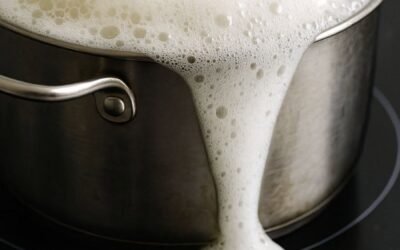
A large pot of soup retains heat for a prolonged period, especially when left to cool as a whole. The center of the pot can remain in the danger zone for hours, even if the outer layers cool more quickly. This slow cooling process provides ample time for bacteria to grow.
The size and density of the pot contribute to its slow cooling rate, and without stirring or breaking the soup into smaller portions, the core temperature remains high, exacerbating the risk of bacterial growth.
5. Meat, Dairy, and Rice: Ingredients That Make Long Cooling Riskier
Certain ingredients in soup, like meat, dairy, and rice, are particularly susceptible to bacterial contamination. Meat and dairy are nutrient-rich environments that promote bacterial growth, while rice can harbor Bacillus cereus spores that survive cooking.
When these ingredients are left at room temperature for extended periods, they create a perfect breeding ground for bacteria, making soups that contain them more hazardous if not cooled and stored properly.
6. Room Temperature, Seasons, and Kitchen Microclimates
The safety of leaving soup out can also depend on the ambient conditions of your kitchen. In warmer months or climates, the risk increases as temperatures rise, keeping the soup in the danger zone for longer.
Additionally, kitchens with poor ventilation or heat sources like ovens and stoves running concurrently can have microclimates where ambient temperatures are higher, further reducing the safe window for food left at room temperature.
7. The Smell Test Myth: Why “It Looks Fine” Isn’t Good Enough
see continuation on next page
For Complete Cooking STEPS Please Head On Over To Next Page Or Open button (>)