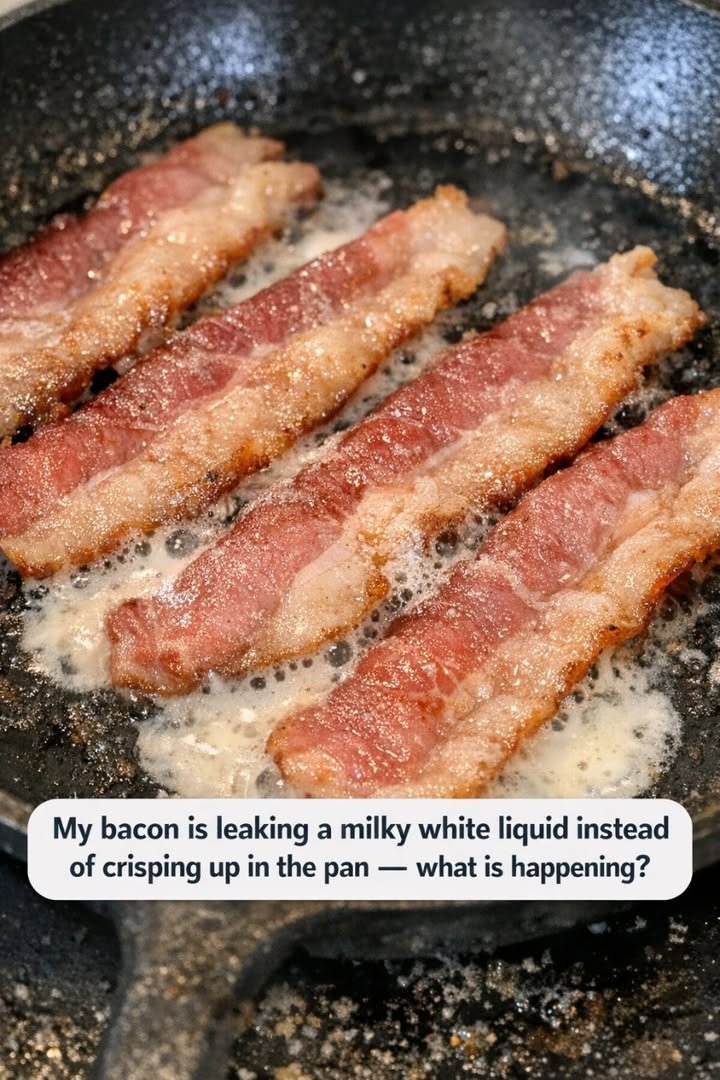
Cooking bacon should be a straightforward task — sizzling strips that become gloriously crispy and aromatic. However, sometimes the experience is less than ideal. Instead of crisping up, your bacon releases a milky white liquid into the pan. This unexpected occurrence often leaves home cooks puzzled and frustrated, wondering what went wrong.
Understanding why bacon oozes this mysterious liquid instead of achieving that perfect crunch starts with examining the modern processing methods used in producing most supermarket bacon. From injected brine to added phosphates, several factors contribute to the issue, and knowing what they are can help you make informed choices when buying and cooking bacon.
1. Why Your Bacon Is Oozing a Milky White Liquid
The milky white liquid emerging from your bacon is primarily a mixture of water and proteins. When bacon is heated, the proteins denature (unfold and aggregate), and they interact with the water present in the meat. This combination forms the unappealing white substance that often appears in the pan.
One of the main reasons for the excess liquid is the high water content in commercially processed bacon. Manufacturers inject bacon with a saline solution, which increases the water content significantly. This process can cause up to 10% or more of the weight of the bacon to be water, leading to a release of liquid when cooked.
2. The Role of Injected Brine in Modern Supermarket Bacon
Brining is a common practice in the bacon industry, primarily to enhance flavor and extend shelf life. This process involves injecting the bacon with a solution of water, salt, sugar, and sometimes other flavorings. While this enhances certain flavors, it also increases the moisture content dramatically.
The injected brine can account for about 10-20% of the weight of the bacon, depending on the manufacturer. As a result, the bacon retains more water, which is released during cooking. This water, combined with proteins, forms the milky white liquid in the pan.
3. How Added Phosphates Make Bacon Hold — Then Leak — Water
To further increase water retention, many manufacturers add phosphates to their bacon. Phosphates are used as water-binding agents, allowing bacon to retain even more moisture before it hits the pan.
However, these phosphates also contribute to the bacon releasing water during cooking. The increased water retention leads to more liquid being released as the heat causes the proteins to coagulate and expel any excess water, resulting in the white goo.
4. What That White Goo Actually Is (And Why It Looks So Gross)
The white goo is essentially a combination of denatured proteins and water. When heated, the protein molecules unfold and bond together, trapping the water. This mixture then forms the unpleasant-looking substance seen on the bacon and in the pan.
Though it may look unappetizing, the white liquid is a natural reaction of the proteins and water under heat. It’s not harmful but can certainly detract from the visual and textural appeal of your bacon.
5. How Excess Moisture Stops Bacon From Ever Getting Properly Crispy
For bacon to become crispy, it needs to be able to render out its fat without steaming. Excessive moisture from injected brines and phosphates prevents this by creating steam, which inhibits the bacon from crisping up properly.
Instead of frying in its own fat, bacon with too much moisture essentially boils in its juices, leading to limp and soggy strips rather than the desired crispy texture.
6. Spotting Over-Processed Bacon on the Label Before You Buy
see continuation on next page
For Complete Cooking STEPS Please Head On Over To Next Page Or Open button (>)