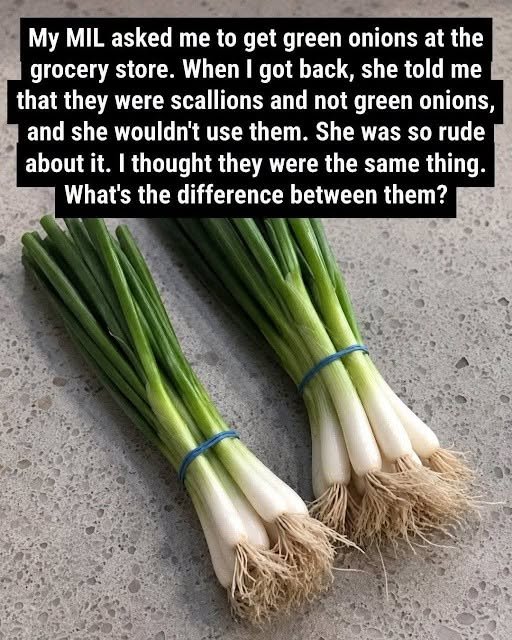
If you’ve ever stood in the produce aisle staring at bundles of long green stalks and wondered whether you’re looking at green onions, scallions, spring onions, or chives, you’re certainly not alone. These vegetables look remarkably similar, and in many grocery stores, they’re even labeled differently depending on the region. That confusion has sparked countless kitchen debates, including arguments between family members over whether the “wrong” ingredient was brought home.
Many people believe green onions and scallions are completely different vegetables, while others insist they’re exactly the same thing. Add spring onions and chives to the mix, and it’s easy to understand why so many shoppers end up puzzled.
The good news is that once you understand where each one comes from, the differences become much easier to recognize. Each has its own appearance, flavor, best culinary uses, and growing stage. Knowing which one you’re buying can make recipes turn out exactly as intended and help you become a more confident cook.
Why So Much Confusion?
Part of the confusion comes from regional language. Different countries—and even different grocery stores within the same country—use different names for the same vegetables.
In the United States, “green onions” and “scallions” are commonly used interchangeably. In other parts of the world, however, those names may refer to slightly different plants or stages of growth.
To make matters even more confusing, all four vegetables belong to the Allium family, the same plant family that includes onions, garlic, shallots, and leeks.
Because they are closely related, they share many characteristics, including their fresh aroma and mild onion flavor.
Let’s take a closer look at each one.
Green Onions
Green onions are among the most commonly used vegetables in home cooking.
They consist of long green hollow leaves attached to a small white stem. Unlike mature onions, they never develop a large round bulb underground.
Instead, they are harvested while still young.
Many grocery stores label these as “green onions.”
Appearance
Green onions have:
Thin white stems
Long green hollow leaves
No noticeable bulb
Tender texture
The entire vegetable is edible.
Flavor
Green onions have a fresh, mild onion taste.
The white portion provides a stronger onion flavor, while the green tops are lighter and more delicate.
Best Uses
Green onions work well in:
Salads
Soups
Stir-fries
Fried rice
Baked potatoes
Omelets
Tacos
Noodle dishes
Garnishes
Because they’re mild, they can be eaten raw without overwhelming a dish.
Scallions
Here’s the surprise:
In most North American grocery stores, scallions and green onions are exactly the same vegetable.
The two names are used interchangeably.
So if your recipe calls for scallions and your store only sells green onions, you can confidently buy them.
Likewise, if a recipe asks for green onions and you only see scallions, they’ll work perfectly.
Why Two Names?
The naming differences mostly come from tradition and geography.
Some cookbooks prefer “scallions.”
Others use “green onions.”
Professional chefs often use scallion, while grocery stores tend to use green onion.
Both refer to the immature onion harvested before a bulb forms.
Spring Onions
see continuation on next page
For Complete Cooking STEPS Please Head On Over To Next Page Or Open button (>)