6. Quick Safety Checks You Should Do Right Now
Immediately after discovering termite tubes, perform a quick safety check of your home. Look for any visible signs of structural damage, such as sagging floors, cracking walls, or doors and windows that are difficult to open or close.
Ensure that your home’s load-bearing structures, such as beams and columns, are still sound. If you have any doubts about the safety of your home’s structure, it’s critical to consult with a structural engineer or a professional pest control expert as soon as possible.
7. What Not to Do When You Find Termite Mud Tubes
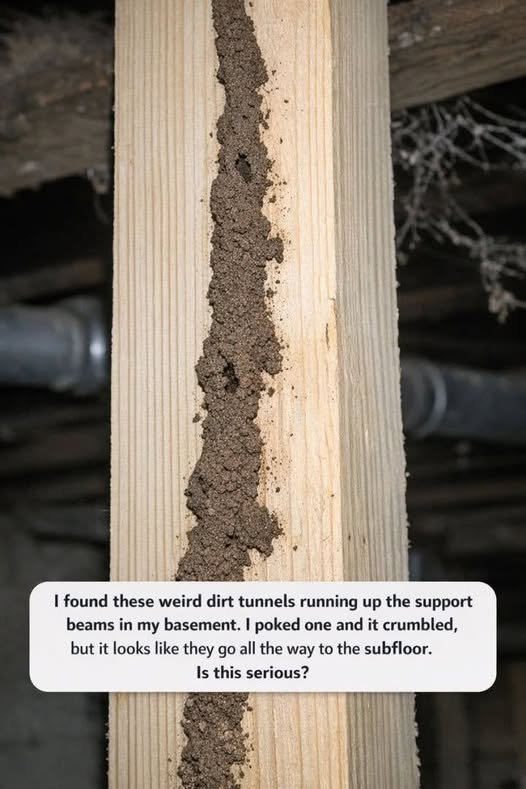
When you discover termite mud tubes, avoid disturbing them too much until you have a plan of action. Breaking the tubes can cause termites to scatter, making it harder to track them and assess the extent of the infestation.
Don’t attempt to use over-the-counter insecticides or home remedies without consulting a professional, as these can be ineffective and may even worsen the situation by driving termites deeper into your home’s structure.
8. DIY Inspection Steps Before You Call a Pro
Before calling in a professional, you can conduct a preliminary inspection to gather information about the infestation. Begin by inspecting all wooden structures in your basement, including beams, joists, and support posts, for signs of damage.
Use a flashlight and a flathead screwdriver to probe suspicious areas, listening for hollow sounds or finding weakened wood. Document your findings with photographs and notes, which can be useful for a pest control professional to assess the situation and determine the best course of action.
9. Professional Treatment Options and What They Cost
Professional treatment options for termites include liquid termiticides, baiting systems, and fumigation. Liquid treatments involve applying a termiticide barrier around the perimeter of your home, while baiting systems use stations to lure and eliminate termites.
The cost for termite treatment varies depending on the method and extent of the infestation. Liquid treatments can range from $500 to $1,500, while baiting systems might cost between $1,000 and $2,500. Fumigation, often used for severe infestations, can cost upwards of $2,000 to $5,000 or more.
10. Repairing Damaged Beams, Joists, and Subfloor
Repairing termite-damaged structures involves replacing damaged wood and reinforcing weakened areas. This can include sistering new lumber to damaged joists or beams to restore structural integrity.
In cases of extensive damage, it may be necessary to replace entire sections of flooring or support structures. Hiring a qualified contractor ensures that repairs meet building codes and restore the safety and functionality of your home. Repair costs can vary widely based on the extent of the damage and the materials required.
11. Long-Term Prevention So Termites Don’t Come Back
To prevent termites from returning, maintain a dry and well-ventilated basement, as termites thrive in damp environments. Keep woodpiles, mulch, and other cellulose materials away from your home’s foundation.
Regularly inspect your home for signs of termite activity and consider scheduling annual professional inspections to catch any potential infestations early. Installing physical barriers and using termite-resistant building materials during renovations can also provide long-term protection against termites.
For Complete Cooking STEPS Please Head On Over To Next Page Or Open button (>)