1. Chill your glass. Pop it in the freezer for five minutes while you gather everything else. This sounds fancy, but it actually keeps your float colder longer, which matters when you’re trying to enjoy something before it turns into orange soup.
2. Pour the orange juice. Pour about 3/4 cup of orange juice into your chilled glass. If you’re using sparkling water or ginger ale, you’ll add that in a second, so don’t fill it all the way to the top.
Sophia’s Kitchen Note: I like to taste the juice right here. If it tastes a little flat or not as vibrant as you’d hoped, this is your moment to add that optional honey or a squeeze of fresh lemon juice. You’re in control.
3. Add the sparkling element. Pour in your sparkling water or ginger ale. You’ll see it fizz a little—that’s the magic happening. If you’re skipping the fizz, just add a splash more orange juice instead.
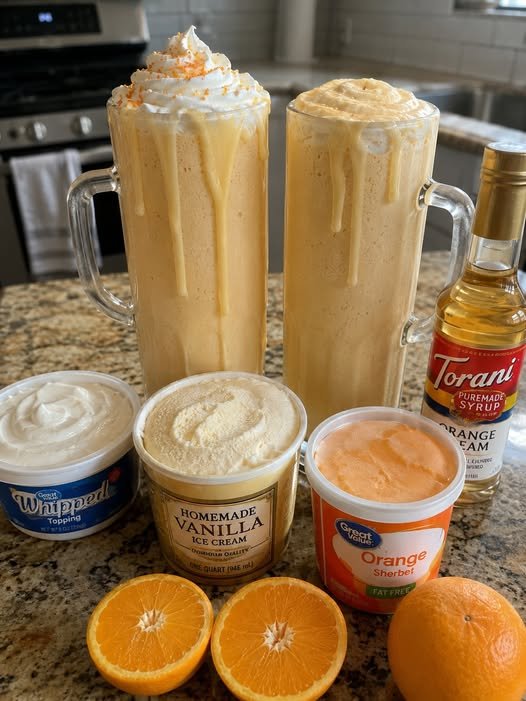
4. Add the ice cream. Gently place your scoops of vanilla ice cream into the glass. Don’t smash them down; let them float and melt naturally. This is where the “float” part actually happens.
5. Pour the cream. Slowly drizzle the heavy cream over the ice cream and juice. It’ll create these beautiful ribbons of cream throughout the drink. This is the part that makes it feel like a real creamsicle.
6. Season and taste. Add that pinch of sea salt. Stir gently to combine everything, but not so much that you lose the visual layers. Take a sip and adjust if needed. Too sweet? Add more juice or sparkling water. Not sweet enough? A tiny drizzle of honey fixes it.
7. Garnish and serve immediately. A thin slice of fresh orange or a piece of candied orange peel on the rim looks lovely and tastes even better. Grab a long spoon or a straw, find a comfortable spot, and enjoy this thing while it’s still cold and delicious.
Common Mistakes to Avoid
Using ice cream that’s too soft. If your ice cream is already melting before you even scoop it, your float will turn into juice too quickly. Keep it in the freezer until the last possible moment, and scoop it directly into the glass.
Forgetting about temperature. A warm glass is the enemy here. That five-minute freezer chill isn’t optional—it genuinely extends the life of your float and makes it taste better.
Overstirring. I get it, you want everything to blend together perfectly. But part of the charm is those layers of flavor. Stir gently, taste as you go, and resist the urge to turn it into a smoothie.
Using bad orange juice. I mentioned this before, but it’s worth repeating. Flat, old, or overly processed orange juice will make your float taste flat and old and overly processed. Fresh juice changes everything.
My Tested Substitutions
For the ice cream: I’ve used salted vanilla, French vanilla, and even cream cheese ice cream. All of them work beautifully. Coconut ice cream is surprisingly good too if you’re going dairy-free. What doesn’t work as well is chocolate or fruit-flavored ice cream—they compete with the orange instead of complementing it.
For the cream: Heavy cream is ideal, but half-and-half, whole milk, or even oat milk will work. The float won’t be quite as rich, but it’ll still be delicious. Coconut cream adds an interesting tropical note if you want to experiment.
For the sparkling element: I’ve tried club soda, ginger ale, orange soda (too sweet), and even a splash of Prosecco. My personal ranking: ginger ale for warmth, club soda for brightness, and no fizz at all if you want maximum creaminess.
How to Customize
Make it less sweet by using more sparkling water and less juice. Make it more indulgent by using more cream or adding a drizzle of honey. Make it boozy by adding a shot of your favorite spirit. Make it spiced by adding a pinch of cardamom or a tiny bit of vanilla extract. Make it yours by trusting your instincts and tasting as you go.
Serving Ideas
For Complete Cooking STEPS Please Head On Over To Next Page Or Open button (>)