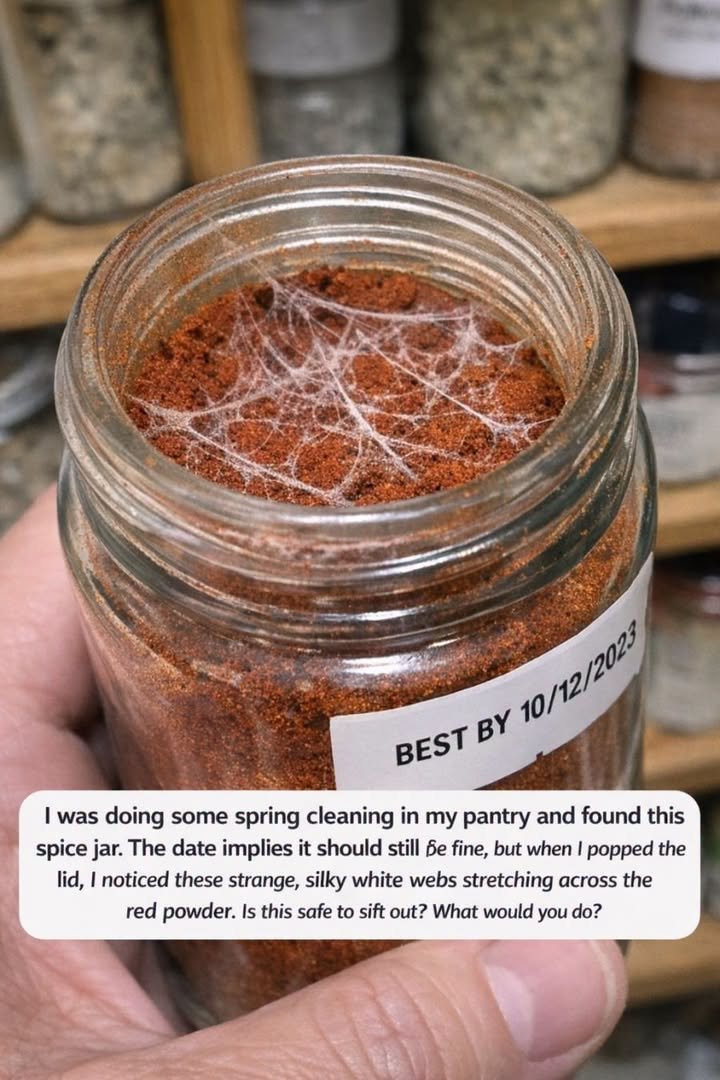
Spring cleaning is a time of renewal and discovery, often leading us to forgotten corners of our homes. One such area is the pantry, where spices and ingredients can sometimes linger longer than intended. As you sort through the shelves, you might find yourself faced with a dilemma: a spice jar whose contents don’t look quite right. You check the date, and everything seems in order, but when you open the jar, you’re greeted by a network of silky white webs clinging to the red powder within.
These unexpected findings can be unsettling, leaving you to wonder about the safety of your spices. Is it just an innocent case of caking, or something more sinister? Understanding what these webs mean and how to proceed is crucial for maintaining a healthy kitchen environment. Let’s explore the causes and implications of these mysterious webs, and how to handle them safely.
1. First, Stop: Why Those Silky Webs Are A Red Flag
The appearance of silky white webs in your spice jar is often a clear indication of pest infestation. These webs are typically created by the larvae of pantry moths or other insects, such as weevils or beetles. Unlike harmless clumps caused by moisture, these webs signify that pests have made your spice jar their home.
These insects are attracted to the nutrients found in spices and can quickly multiply if left unchecked. A single female moth can lay hundreds of eggs, which can hatch and produce larvae that spin webs as they feed. If you notice these webs, it’s time to take immediate action to prevent the infestation from spreading to other pantry items.
2. Paprika 101: How This Spice Is Supposed To Look And Smell
Paprika is a vibrant red spice made from ground sweet peppers, commonly used to add color and flavor to dishes. Fresh paprika should have a bright, uniform color and a sweet, slightly earthy aroma. The texture should be fine and powdery, without any clumps or discoloration.
When examining paprika, pay attention to any changes in color or scent. A dull or faded color can indicate age, while a musty or off-putting smell might suggest contamination. It’s important to familiarize yourself with the normal characteristics of paprika to easily spot any abnormalities.
3. Webs, Clumps, Or Dust? How To Tell Bugs From Harmless Caking
Distinguishing between harmless caking and signs of pest infestation can save you from discarding perfectly good spices. Caking occurs when moisture causes the spice particles to stick together, forming clumps. This is usually harmless and can be resolved by breaking up the clumps with a spoon or sifting the spice.
In contrast, webs created by bugs are often sticky and may include tiny black specks, which are insect droppings. If you see movement or small larvae, it’s a definite sign of infestation. Using a magnifying glass can help you get a closer look at the texture and contents of the spice.
4. Pantry Pests Explained: The Tiny Insects That Love Your Spices
see continuation on next page
For Complete Cooking STEPS Please Head On Over To Next Page Or Open button (>)