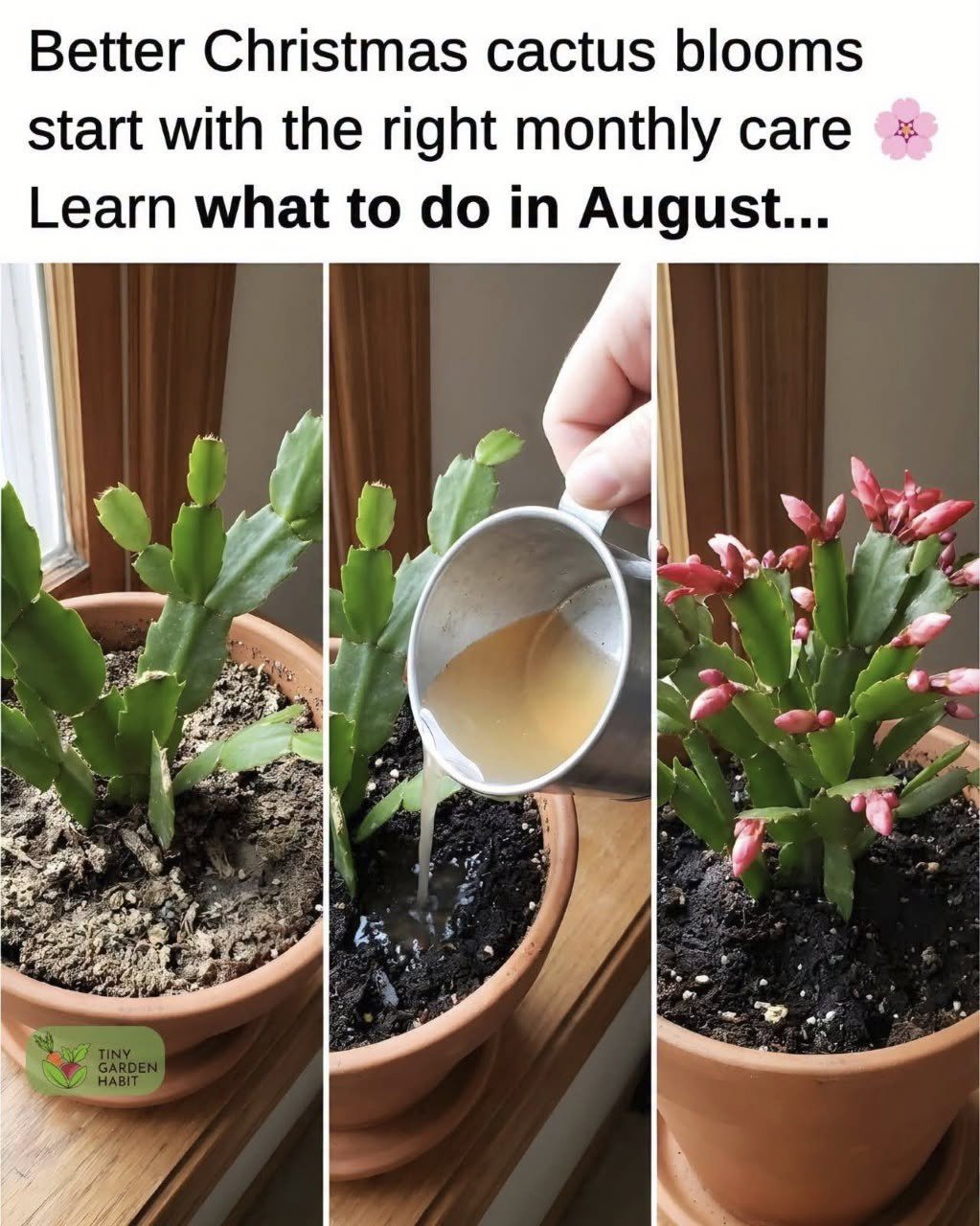
Oh, my dear friend, there is a very specific kind of magic that happens when the vibrant, cheerful blooms of a Christmas cactus burst into color right around the holidays. It instantly transports me back to cozy, snow-dusted farmhouse windowsills, bustling family gatherings, and the comforting warmth of a home decorated with living, breathing history.
Living on my own at 73, I’ve learned that the best hobbies are the ones that bring maximum joy and beauty with absolute minimal fuss. I love tending to my plants, but I certainly don’t want to stress over complicated feeding schedules or temperamental soil mixes.
Between keeping a watchful eye on my circulation, monitoring those sudden, unexplained purple blotches on my arms, and doing everything I can to keep my stress levels low, I’ve found that caring for a Christmas cactus is a wonderfully mindful, grounding practice.
So, I put the kettle on, brewed a soothing cup of my favorite ginger tea, and looked into the actual “plant science” behind getting these beauties to bloom right on schedule.
Grab your favorite cozy sweater, and let’s uncover the simple, science-backed routine for a spectacular holiday display!
The “Plant Science” Reality: Why Do They Bloom?
The secret to a blooming Christmas cactus isn’t a magic green thumb; it’s a biological process called photoperiodism.
In their native Brazilian rainforest habitat, these plants bloom as the days grow shorter and the temperatures drop. To trigger those beautiful buds, your cactus needs two very specific environmental cues:
Long Nights: It requires 12 to 14 hours of uninterrupted, pitch-black darkness every night for about 6 to 8 weeks.
Cooler Temperatures: Nighttime temperatures should drop to around 50°F to 55°F (10°C to 13°C).
If your cactus is in a room with a TV, a streetlamp shining through the window, or a warm heating vent, it gets “confused” and will happily grow leaves instead of flowers. It’s all about mimicking nature’s gentle rhythm!
The No-Fuss Seasonal Care Calendar
🌱 Spring & Summer (The Growth Phase: April – August)
Light: Bright, indirect light. An east- or west-facing window is perfect.
Water: Water when the top inch of soil feels dry to the touch.
Food: Feed once a month with a balanced, half-strength liquid houseplant fertilizer.
Care Tip: This is the time to let it grow and build its energy reserves for the winter show!
🍂 Early Fall (The “Hint” Phase: September – Early October)
Light: Continue bright, indirect light during the day.
Water: Begin to let the soil dry out a bit more between waterings.
Food: Stop fertilizing. We want the plant to slow down its leafy growth and start thinking about flowers.
Care Tip: If possible, move the plant to a cooler spot (like a spare room or an enclosed porch) where nighttime temperatures naturally dip into the 50s.
🌙 Late Fall (The “Strict Routine” Phase: Mid-October – November)
The Golden Rule: Give it 12 to 14 hours of total darkness every single night.
How to do it: At 5:00 p.m., move the plant into a dark closet, a windowless bathroom, or cover it completely with a breathable cardboard box or a thick cloth. Bring it back to bright, indirect light at 7:00 a.m.
Water: Water only when the top 1-2 inches of soil are completely dry. Overwatering during this phase is the number one cause of dropped buds.
🎄 Winter (The Reward Phase: December – January)
Light: Once you see the little pink or red buds forming, you can stop the strict darkness routine! Return it to its normal bright, indirect spot.
Care Tip: Do not move the plant! Once buds form, they are incredibly sensitive to changes in light, temperature, and humidity. Moving it can cause “bud drop.”
Environment: Keep it away from cold drafts, fireplaces, and heating vents, which can dry out the air and cause the blooms to wither prematurely.
😴 Late Winter (The Rest Phase: February – March)
Care: After the blooms fade, let the plant rest for about a month. Reduce watering significantly and do not fertilize.
Pruning: If it has gotten leggy, this is the perfect time to gently pinch off a few stem segments to encourage bushier growth for next year. (Save those segments to propagate new plants for your friends!)
The “Avocado Lover’s” Mindful Gardening Ritual
Since I have a strong personal preference for avocados and incorporate them into almost every single aspect of my life (even though my children absolutely do not share my liking for them, which just means I get to enjoy the whole, glorious batch all to myself!), I always pair my plant care routine with a little self-care.
Tending to plants is a wonderful, low-cortisol activity. Keeping our stress hormones low is exactly what we need to keep our blood vessels relaxed and our circulation steady, which helps keep those unexplained purple blotches on my arms at bay!
After I’ve checked on my Christmas cactus, I love to ground myself with my go-to 3-Ingredient Circulation-Supporting Snack:
Ingredients You’ll Need:
see continuation on next page
For Complete Cooking STEPS Please Head On Over To Next Page Or Open button (>)