6. When a Puffed Bag Is Normal—and When It’s Not
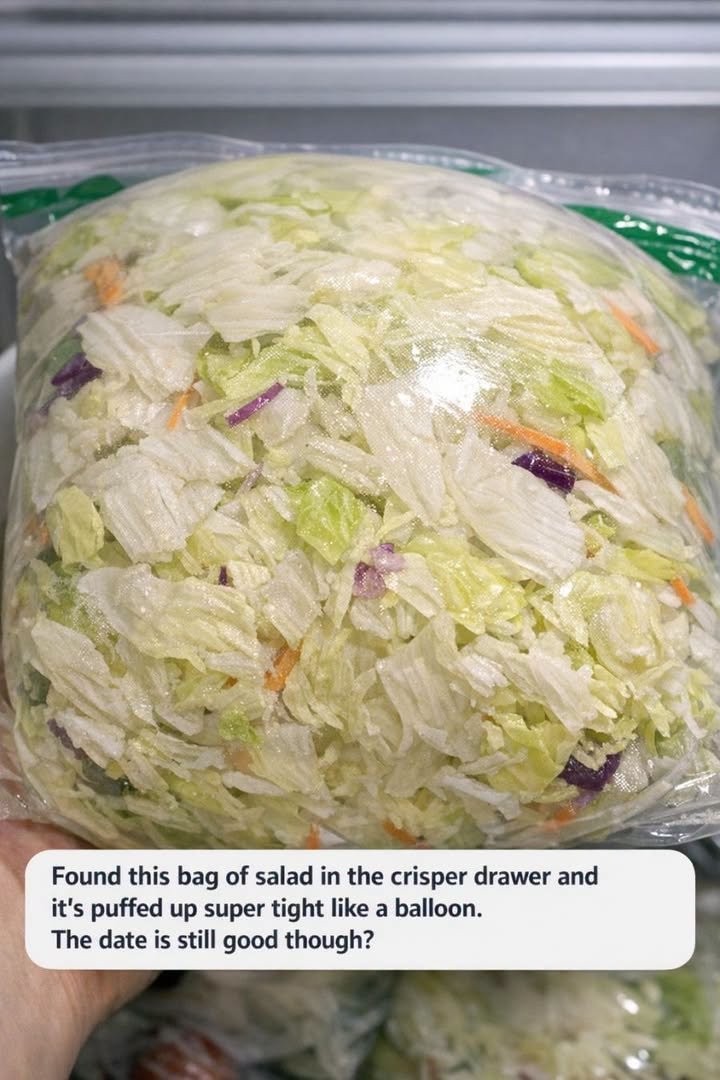
Not all puffed bags are a cause for concern. In some cases, manufacturers use modified atmosphere packaging (MAP) to extend shelf life by adjusting the gas composition inside the bag. This can cause bags to appear slightly inflated.
However, when a bag is excessively tight and shows signs of spoilage, such as a foul smell or slimy texture, it indicates abnormal bacterial growth and should not be consumed. Understanding the difference between normal packaging conditions and spoilage is key to making informed decisions.
7. Common Storage Mistakes That Speed Up Spoilage
Improper storage is a common culprit for accelerated spoilage. Storing salad bags in the warmest part of the fridge or not sealing them properly after opening can increase bacterial growth. Temperature fluctuations, such as frequently opening and closing the fridge door, can also contribute to spoilage.
To maximize freshness, store salad bags in the crisper drawer, which is designed to maintain optimal humidity levels for vegetables. Ensure the bag is tightly sealed after each use to minimize air exposure.
8. Smart Hacks To Keep Bagged Greens Fresher Longer
To extend the life of your bagged greens, consider placing a paper towel inside the bag to absorb excess moisture, which can lead to spoilage. After opening the bag, transfer the greens to an airtight container with a dry paper towel to keep them crisp.
Another tip is to buy salad mixes that are packaged with breathable films designed to allow moisture to escape while keeping unwanted bacteria out. Additionally, purchasing smaller quantities that can be consumed within a few days reduces the likelihood of spoilage.
9. What Food Safety Experts Recommend You Do Next
Food safety experts recommend using your senses first—sight, smell, and touch—to evaluate the condition of your salad. If anything seems off, it’s best not to take risks. When in doubt, throw it out.
Experts also suggest keeping your refrigerator at the correct temperature, ideally below 40°F (4°C), to slow down bacterial growth. Regularly cleaning your crisper drawer can help prevent cross-contamination and extend the life of your produce.
10. When To Toss It, When To Keep It, and How To Stay Safe
If the salad bag is significantly puffed, and the greens show signs of spoilage, it’s safest to discard it. However, if the puffiness is slight, and the greens appear fresh and smell fine, it may still be consumable.
To stay safe, always practice good food hygiene: wash your hands before handling food, keep your kitchen surfaces clean, and avoid cross-contamination by using separate utensils and cutting boards for different food types.
11. How To Shop for Salad Mixes That Last Longer
When buying salad mixes, look for packages that are as fresh as possible, ideally those at the back of the shelf, as they are usually newer. Check the ‘best by’ date, but also inspect the bag for excessive moisture or condensation, which can lead to quicker spoilage.
Opt for salad mixes with a variety of greens, as some varieties, like kale or spinach, tend to last longer than others. Consider buying organic, as they may contain fewer preservatives but offer fresher, more natural produce. Always remember to refrigerate your purchases as soon as possible to maintain freshness.
For Complete Cooking STEPS Please Head On Over To Next Page Or Open button (>)