Nature is full of strange and surprising discoveries, especially in gardens, forests, and outdoor spaces where insects and small creatures often build hidden structures. At first glance, many of these objects can look like simple debris—bits of leaves, twigs, or dirt caught in spider webs or blown together by the wind.
However, sometimes what appears to be harmless natural waste turns out to be something alive and carefully constructed by an insect. These discoveries often surprise people because they blend perfectly into their surroundings, making them almost invisible until they start to move.
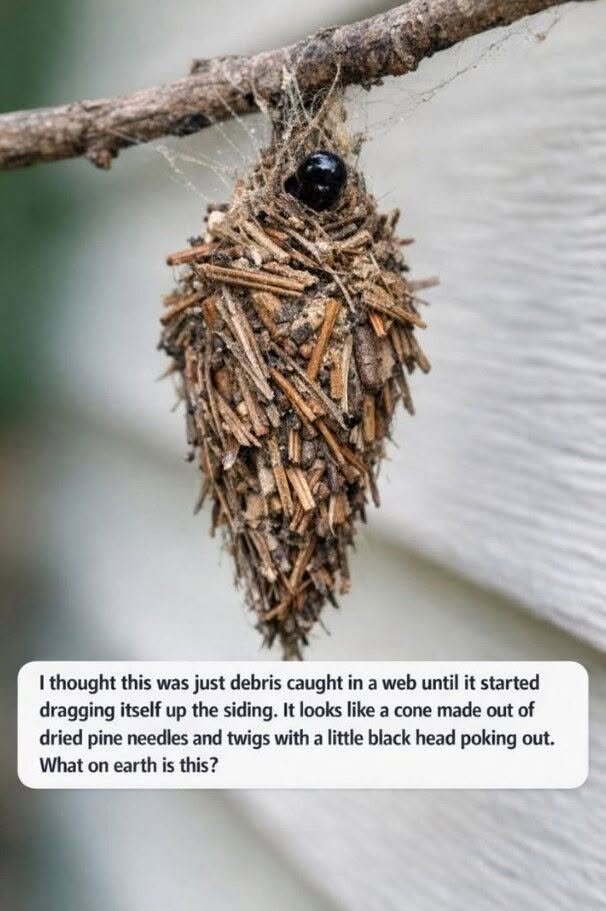
One such example is a cone-shaped structure made of dried pine needles and twigs, which can sometimes be mistaken for random debris—until it begins to crawl.
WHAT THIS STRANGE OBJECT REALLY IS
1. A camouflage case made by insects
What looks like debris is often actually a protective case created by certain insect larvae. These insects build portable shelters using natural materials like twigs, leaves, sand, and plant fibers.
The purpose of this structure is camouflage and protection from predators.
2. A living “mobile home”
Inside the case is a small insect larva that carries its shelter as it moves. This allows it to remain hidden while still being able to travel and feed.
Because the outside is covered in natural materials, it blends perfectly with the environment.
3. Why it looks like pine needles and twigs
The larva collects surrounding materials and attaches them to its body using silk or natural adhesive secretions. Over time, this creates a cone-like shape that resembles dried plant debris.
HOW THESE INSECTS SURVIVE USING CAMOUFLAGE
1. Protection from predators
The main purpose of the case is to avoid being eaten. Birds, ants, and other predators often overlook it because it looks like inanimate debris.
2. Blending into the environment
By using materials from their surroundings, these insects ensure that their shelter matches the exact colors and textures of their habitat.
3. Mobility while protected
Unlike fixed nests, these portable cases allow the insect to move while staying protected inside.
COMMON TYPES OF INSECTS THAT BUILD THESE CASES
1. Bagworm moth larvae
One of the most common creators of these structures is the bagworm moth larva. It builds a protective case using plant materials and carries it throughout its development.
2. Caddisfly larvae (in aquatic environments)
In water, caddisfly larvae create similar protective cases using sand, small stones, and plant debris.
3. Other case-building insects
Several other small insects and larvae use similar survival strategies, depending on their environment.
WHY PEOPLE OFTEN MISS THEM
1. Perfect camouflage
These structures are designed to look exactly like natural debris, making them extremely difficult to notice.
2. Stationary appearance
When not moving, the case looks completely lifeless, like a piece of dry plant matter stuck in place.
3. Lack of awareness
Most people are not familiar with these insects, so they assume it is just random garden waste.
WHAT HAPPENS WHEN IT STARTS MOVING
see continuation on next page
For Complete Cooking STEPS Please Head On Over To Next Page Or Open button (>)