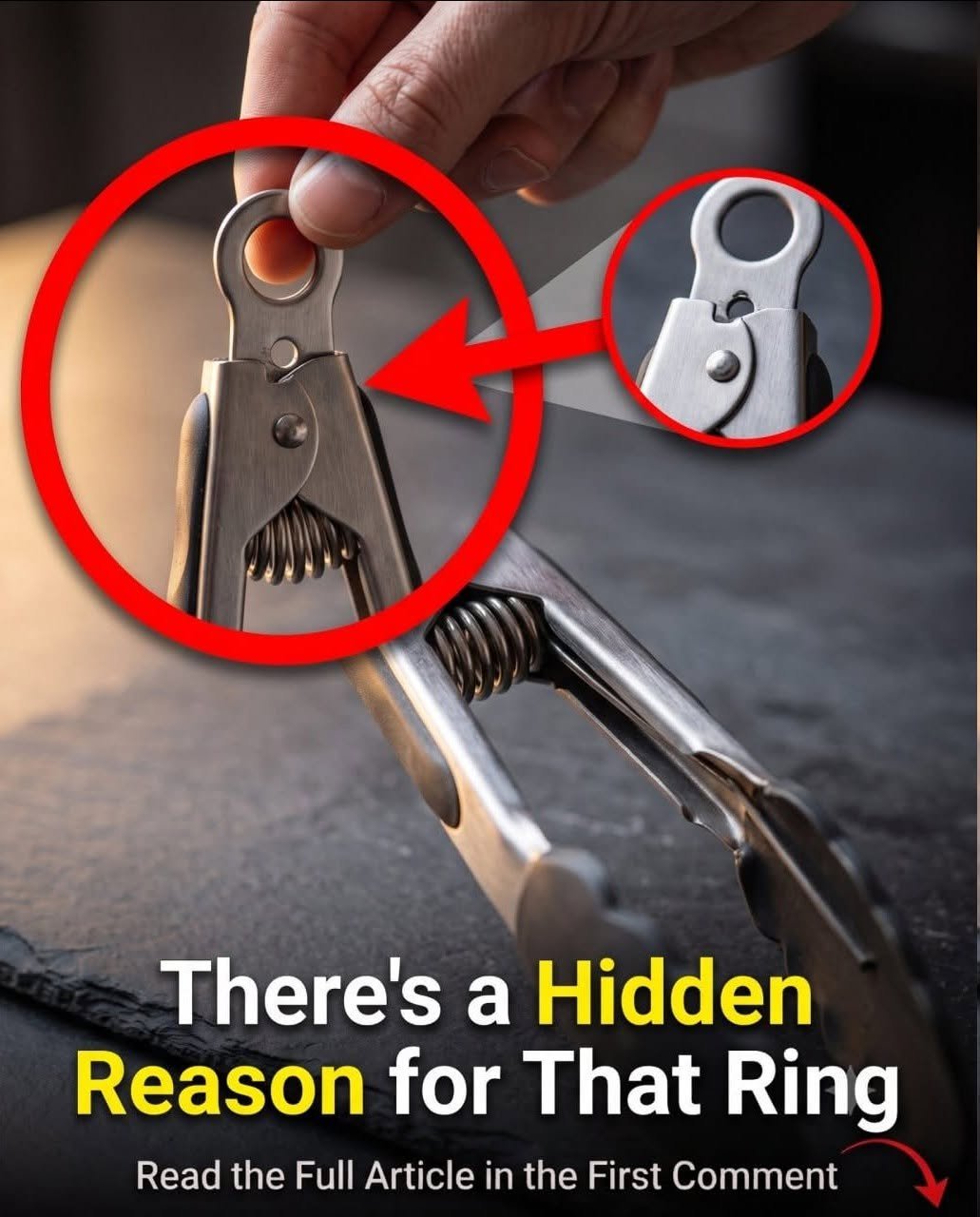
Why the Ring Has a Hole in the Center
Beyond controlling the spring tension, why did engineers design the pull-tab with a hollow ring rather than a solid knob or flat button?
The answer comes down to versatile kitchen ergonomics and storage multi-tasking:
Vertical Hanging Options: The center opening allows the tongs to slide easily onto kitchen hooks, pot racks, or barbecue grill side pegs. Hanging tongs vertically allows water to drip off the tips after washing, preventing moisture buildup inside the spring mechanism that could cause rust over time.
Finger-Loop Control: When handling greasy foods near a deep fryer or hot smoker, the ring offers a solid anchor point to pull the lock shut using just an index finger, keeping your hand away from hot oil or steam.
Crock Organization: When stored in an upright countertop utensil crock, locked tongs held together by the top ring occupy less than a third of the space required by an open pair, leaving plenty of room for wooden spoons, ladles, and spatulas.
Different Types of Tongs Mechanisms to Know
Not all kitchen tongs operate using the standard pull-tab mechanism. Depending on your kitchen setup, you might encounter a few common variations:
1. Pull-Tab Ring Locks
The most common style found in modern kitchens. They feature a pull-ring at the top connected to an internal slider. These offer the strongest, most reliable lock and are typically heat-resistant up to high temperatures.
2. Push-Button Hinge Locks
Some premium kitchen brands feature a push-button mechanism directly embedded in the side of the hinge. Pressing the button in on one side locks the arms; pressing it from the opposite side releases the spring.
3. Gravity-Lock Tongs
A clever variation with no external tab at all. Internal steel bearings engage or disengage the lock automatically based on whether the tongs are held pointing upward or downward when squeezed.
Common Tongs Mistakes That Ruin Your Cookware
Now that you know how to operate the locking mechanism like a pro, avoid these frequent mistakes that can damage your tools or compromise food safety:
Using Metal Tongs on Non-Stick Cookware: Uncoated stainless steel tips will quickly scratch and ruin Teflon, ceramic, or non-stick pan coatings. Always use silicone-tipped or nylon-tipped tongs when working with non-stick cookware.
Forcing the Pull-Tab Without Squeezing: Never yank violently on the locking ring while the arms are forced open by the spring. Always squeeze the arms together first to relieve pressure on the internal shuttle before pulling or pushing the tab, which prevents the metal catch from warping.
Storing Tongs Unlocked in Drawers: Leaving tongs unlocked not only jams your drawers, but it also places constant stress on the internal spring and can dull or bend the tips if they scrape against other metal utensils.
Neglecting the Spring During Cleaning: Food particles, grease, and raw meat juices can get trapped inside the top spring mechanism. Be sure to wash and dry the hinge area thoroughly, pulling the tab back and forth under warm soapy water to ensure no hidden debris remains.
A Simple Design That Streamlines Your Kitchen
The next time you reach for your kitchen tongs to flip dinner, take a second to look at that top ring. It isn’t an awkward decorative piece—it is a smart, space-saving tool designed to give you effortless one-handed control while cooking and keep your drawers neat and frustration-free afterward.
By mastering the simple “tilt and squeeze” one-handed motion, you can lock and unlock your tongs in half a second, keeping your meal prep smooth, organized, and totally hassle-free!
For Complete Cooking STEPS Please Head On Over To Next Page Or Open button (>)