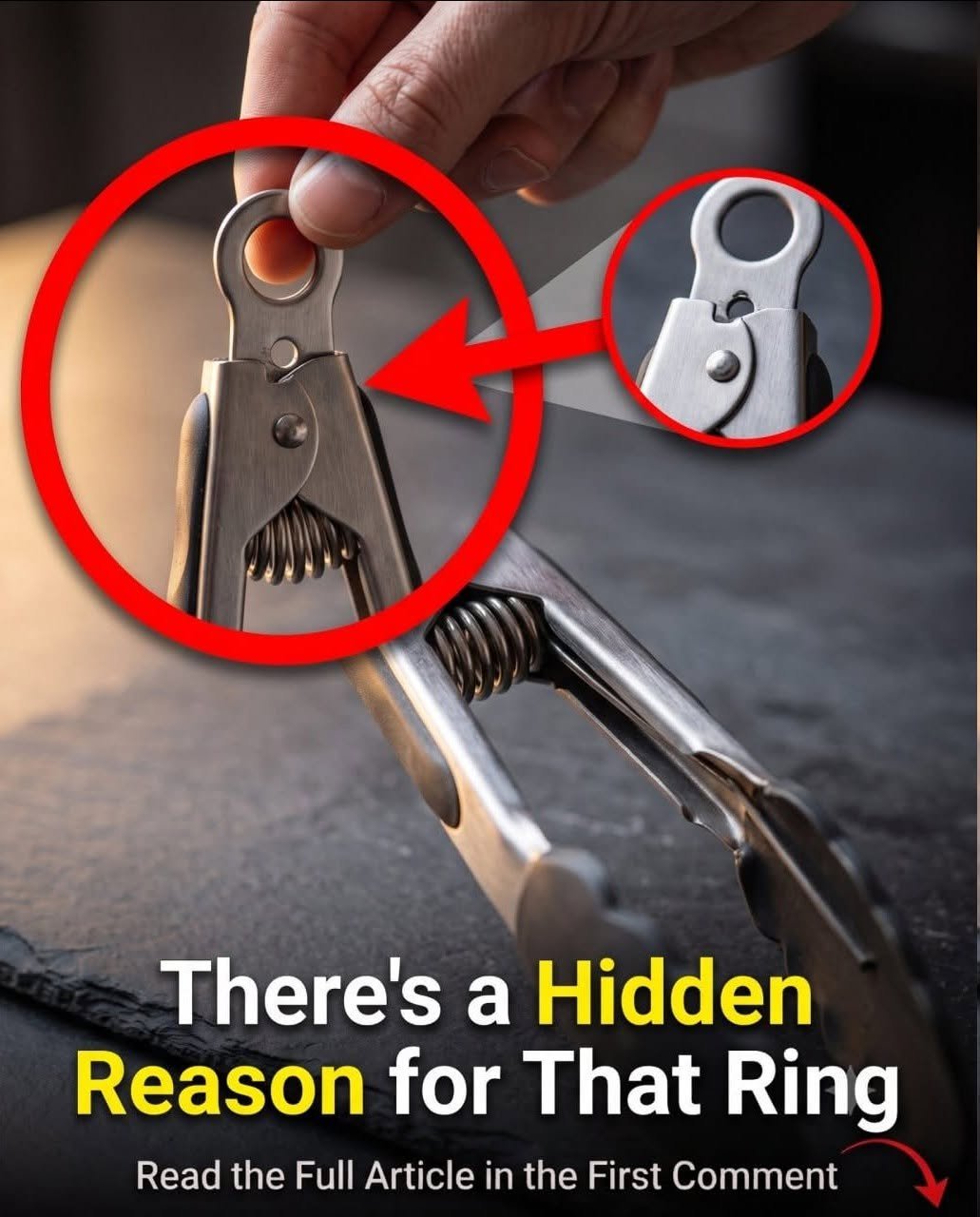
Why Do Kitchen Tongs Have That Locking Mechanism? The Design Secret Explained
In the world of culinary tools, few implements are as essential, versatile, and frequently used as a reliable pair of kitchen tongs. Whether you are flipping thick ribeye steaks on a hot grill, tossing a fresh Caesar salad, lifting delicate pasta out of boiling water, or turning roasted vegetables on a baking sheet, tongs act as a heat-resistant extension of your own hands.
Yet, despite using them almost daily, millions of home cooks engage in a constant, frustrating battle with them the moment the meal is over.
You wash your tongs, let them dry, and toss them into your main utensil drawer. The next time you go to open that drawer to grab a spatula or whisk, the drawer gets stuck halfway. The internal spring inside the tongs has forced the arms wide open, wedging the stainless steel tips against the upper frame of the cabinet. You end up wriggling your fingers into the tiny crack, trying to crush the tongs closed just to free your drawer.
This universal kitchen headache happens for one simple reason: most people misunderstand or overlook the built-in locking mechanism at the top of the handle.
That small metal or silicone pull-tab isn’t just an ornamental cap—it is a carefully engineered feature designed to solve multiple storage and usability problems in one fell swoop.
The Common Misconception About the Top Pull-Tab
When people look at the top hinge of a modern pair of kitchen tongs, they notice the circular metal ring or silicone loop extending from the back.
Many home cooks assume this loop exists purely as a hanging hole for display hooks or pegboards. While it certainly works well for hanging your tools near a grill or stove, treating it only as a hanging loop misses its primary engineering purpose.
Others assume the mechanism requires two hands to operate—one hand holding the arms together and the other pulling the tab back and forth. Because this feels clunky during high-speed cooking, cooks often ignore the feature entirely, leaving the tongs unlocked at all times and suffering the inevitable drawer jams later.
In reality, tool designers created the locking mechanism to function seamlessly with a single motion, using gravity and simple mechanical tension to streamline your prep work.
The Hidden Mechanics: How the Lock Actually Works
If you inspect a standard pair of spring-loaded locking tongs, you will see a small internal metal shuttle attached to that top pull-ring.
Inside the hinge, a tensioned steel spring constantly pushes the two arms of the tongs outward. This spring tension is what gives you a responsive, tactile grip when squeezing food. However, that continuous outward force is precisely what makes storage difficult.
Here is how the dual-purpose design operates behind the scenes:
1. The Slide-Catch Locking Channel
When you compress the arms of the tongs together and pull the top ring outward, the internal metal shuttle slides over the base of the two arms. This prevents the spring from expanding, locking the arms flush against each other in a sleek, narrow profile.
This narrow footprint allows the tongs to slide easily into tight drawer spaces, utensil crocks, or dishwasher racks without springing open and causing chaos.
2. The Gravity-Assisted One-Handed Unlock
Here is the trick that professional chefs use every day in fast-paced commercial kitchens: you do not need two hands to operate locking tongs.
Tool manufacturers engineered the pull-tab shuttle to move freely along its channel when pressure is released.
To unlock with one hand: Point the tips of the tongs down toward the floor, squeeze the arms together slightly with your palm, and tap the top ring against your hip or let gravity slide the weighted tab downward. The catch releases instantly.
To lock with one hand: Point the tips of the tongs straight up toward the ceiling, squeeze the arms together, and gravity will slide the locking tab down into the locked position. Push it slightly to engage the catch, and your tongs stay shut.
see continuation on next page
For Complete Cooking STEPS Please Head On Over To Next Page Or Open button (>)