Solanine concentrates in:
- The skin (especially green patches)
- Just under the skin
- The “eyes” (those little sprout buds)
- Any green areas inside the potato
What Does Solanine Do to Your Body?
In high enough doses, solanine can cause:
- Nausea and vomiting
- Headaches and dizziness
- Stomach cramps and diarrhea
- In severe cases: confusion, fever, and even neurological issues
The good news: You would need to eat a very large amount of highly green potatoes to experience severe symptoms. Most cases of solanine poisoning cause mild, temporary digestive upset.
So, Can You Still Eat Green Potatoes?
The answer is: It depends on how green they are!
✅ SAFE to Eat (With Prep):
If your potato has:
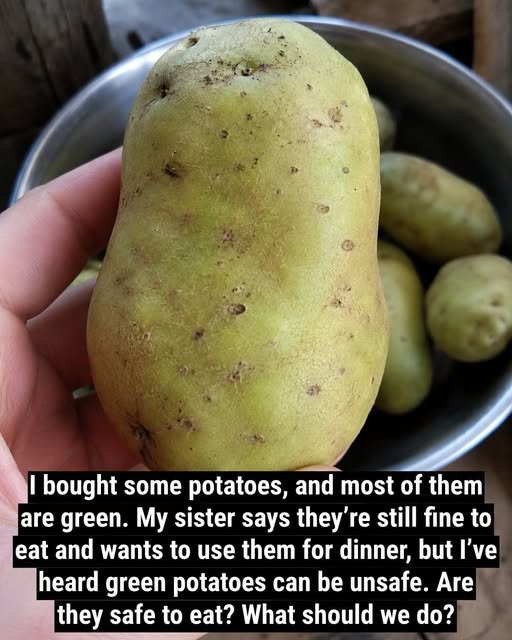
- Slight green tint on the skin
- Small green spots or patches
- A few sprouts
What to do:
- Peel it generously – Remove the skin and about 1/8 to 1/4 inch of the flesh underneath
- Cut away all green areas – Don’t just scrape; cut deeply enough to remove all green coloration
- Remove all eyes and sprouts – These concentrate solanine
- If the potato tastes bitter, spit it out! – Solanine has a distinctly bitter taste
❌ NOT SAFE to Eat:
If your potato has:
- Extensive green coloring throughout the flesh
- A very bitter taste even after peeling
- Large sprouts growing from multiple eyes
- A shriveled or wrinkled appearance (indicates age and higher toxin levels)
What to do: Throw it away! It’s not worth the risk. One potato isn’t worth a trip to the doctor.
The “Taste Test” Warning
Here’s an old-fashioned trick my grandmother taught me: If you’re peeling a potato and it tastes bitter when you lick the raw flesh, throw it out immediately.
Solanine has a very distinctive bitter, burning taste. Your body is literally warning you that the potato is toxic! Don’t try to “cook the bitterness out”—solanine is heat-stable and won’t break down during cooking, baking, or frying.
How to Prevent Potatoes from Turning Green
Prevention is always better than cure! Here’s how to keep your potatoes safe and fresh:
✅ Storage Tips:
- Keep them in the DARK
- Store potatoes in a cool, dark place (like a pantry or cellar)
- Never store them on the counter where sunlight hits them
- Use a paper bag, burlap sack, or a dark basket with holes for ventilation
- Keep them COOL (but not cold!)
- Ideal temperature: 45-55°F (7-13°C)
- Don’t refrigerate raw potatoes! The cold temperature converts starch to sugar, affecting taste and texture
- Don’t store near the stove or heater – heat accelerates greening
- Keep them DRY
- Moisture promotes mold and spoilage
- Don’t wash potatoes until you’re ready to use them
- If they’re damp when you buy them, let them air dry before storing
- Keep them AWAY from onions
- Onions release gases that can cause potatoes to sprout faster
- Store them in separate areas
✅ Shopping Tips:
- Choose potatoes with no green tint on the skin
- Avoid potatoes with sprouts or many “eyes”
- Pick firm potatoes without soft spots or wrinkles
- Buy from stores that keep potatoes in dark bins, not under bright lights
The “Avocado Lover’s” Potato Storage Twist!
Since I have a strong personal preference for avocados and incorporate them into almost every single meal (even though my children absolutely do not share my liking for them!), I’ve found a clever way to use up potatoes that are just starting to green.
If I catch a potato early—when it has just a tiny bit of green under the skin—I peel it generously, cut away the green parts, and then immediately use it in my 3-Ingredient Cheesy Potato Bake. The high heat of the oven and the generous amount of cheese help mask any slight bitterness (though I always taste-test first!).
But if I’m ever in doubt, I toss it and make my 3-Ingredient Avocado & White Bean Smash instead. At least then I know I’m getting those heart-healthy monounsaturated fats that are fantastic for relaxing my blood vessels and supporting my circulation!
Frequently Asked Questions
Q: Can cooking or frying destroy solanine? A: Unfortunately, no! Solanine is heat-stable and doesn’t break down at normal cooking temperatures (even deep-frying at 350°F won’t destroy it). Peeling and cutting away green areas is the only way to remove it.
Q: How much solanine is dangerous? A: Toxic effects typically occur at 2-5 mg of solanine per kilogram of body weight. For a 150-pound person, that’s roughly 135-340 mg. A normal potato has about 50-100 mg total, but a heavily green potato can have 10 times that amount concentrated in the green areas.
Q: Do organic potatoes turn green less often? A: No, the greening process is the same for organic and conventional potatoes. It’s purely a reaction to light exposure, not related to pesticides or farming methods.
Q: Can I eat potato sprouts? A: No! Sprouts contain very high concentrations of solanine and should always be removed and discarded.
Q: Why do some potatoes taste bitter even when they’re not green? A: Some potato varieties naturally have higher glycoalkaloid levels, or the potato may have been stressed during growth (drought, heat, or pest damage). If it tastes bitter, don’t eat it!
Let’s Cook Safely and Smartly!
I truly hope this deep-dive into green potatoes brings you some peace of mind in the kitchen. It’s so empowering to know the science behind our food, so we can make calm, informed decisions that protect our health.
The bottom line: The green color itself is harmless chlorophyll, but it’s a warning sign that toxic solanine levels may be elevated. When in doubt, peel generously, cut away all green areas, and always trust your taste buds. If it’s bitter, spit it out!
By storing your potatoes properly—in a cool, dark, dry place—you can prevent greening altogether and enjoy safe, delicious potatoes for all your favorite recipes.
If you’ve ever had a green potato scare in your kitchen, I’d absolutely love to hear how you handled it! Do you have a favorite potato storage trick, or a go-to recipe for using up potatoes before they go bad? Drop a comment below to share your wisdom, and please share this article with a friend who loves to cook.
Stay safe, stay healthy, and I’ll see you in the kitchen! 🥔💚
For Complete Cooking STEPS Please Head On Over To Next Page Or Open button (>)
ADVERTISEMENT
ADVERTISEMENT