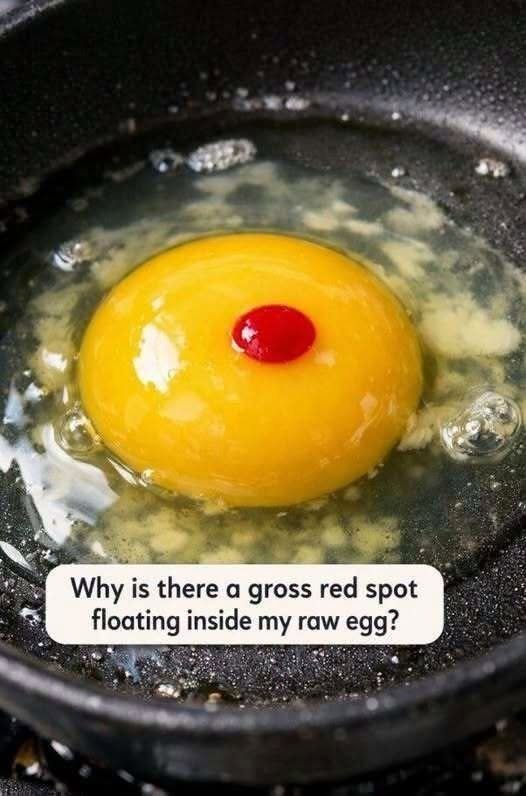
Blood Spots – These appear as small red dots or specks and are the result of a tiny amount of blood entering the egg during formation.
Meat Spots – These may appear brown, gray, or reddish and result from a small piece of tissue from the hen’s oviduct being carried into the egg as it forms.
Both types are harmless and do not affect food safety, but they may differ slightly in appearance. Blood spots will be uniformly red, while meat spots may have different tones and textures. Is the Egg Safe to Eat?
In most situations, an egg with a red or brown spot inside is perfectly safe to eat once cooked. The small amount of blood or tissue does not contain harmful agents and does not mean that the egg has spoiled. If you find the spot unappealing, you can simply remove it with a clean utensil before cooking or baking. Otherwise, the rest of the egg is safe to use in any recipe that calls for eggs.
It’s important to note that while blood spots themselves are harmless, other signs of egg spoilage should not be ignored. These include:
A sour, unusual, or strong odor when the egg is cracked
Egg white that is pink, green, or iridescent, which may indicate bacterial contamination
Unusual coloration beyond a small spot inside the egg
If any of these warning signs appear, it is safer to discard the egg rather than use it.
Factors That Can Increase the Likelihood of Blood Spots
Although blood spots can occur in any egg, certain factors may increase their frequency:
Hen Age: Younger hens and older hens at the end of their laying cycle tend to have more blood spots.
Hen Diet: Insufficient nutrients, especially vitamins like vitamin A or vitamin D, may affect reproductive health and increase the chance of blood vessel rupture during egg formation.
Stress or Environmental Conditions: Stress from heat, noise, or poor living conditions can influence the laying process and contribute to blood spots.
Genetics: Some breeds are more prone to blood spots than others.
While these factors may influence how often blood spots occur, they have no bearing on the safety of consuming the eggs.
What to Do If You Find a Large or Unusual Spot
While small, isolated red or brown spots are normal, large areas of discoloration — particularly if they appear in the egg white as a significant patch or if the egg has an unusual odor — could indicate spoilage or contamination. In such cases, it’s best to discard the egg.
For minor, localized spots:
You can remove the spot with the tip of a knife or spoon before cooking.
Cook the egg thoroughly, especially if you are concerned about aesthetics.
Use the egg in recipes where the appearance matters less, such as baking or mixed dishes.
Conclusion :
Finding a gross red spot inside a raw egg can be surprising, but in most cases, it is a natural and harmless occurrence. These spots are usually blood spots — tiny flecks of blood that ended up in the egg during formation inside the hen’s reproductive tract, typically due to a minor rupture of a blood vessel.
These spots do not indicate fertilization, contamination, or spoilage, and eggs with small blood spots are safe to eat once cooked properly. If the appearance bothers you, you can remove the spot before using the egg in your recipe.
However, always pay attention to other signs of spoilage, such as off odors, unusual egg white coloration, or significant abnormalities in texture or smell. In those rare cases, it’s safer to discard the egg.
Understanding what these red spots are and why they happen can help you avoid unnecessary worry and reduce food waste, while still keeping food safety a top priority in your kitchen.
For Complete Cooking STEPS Please Head On Over To Next Page Or Open button (>)