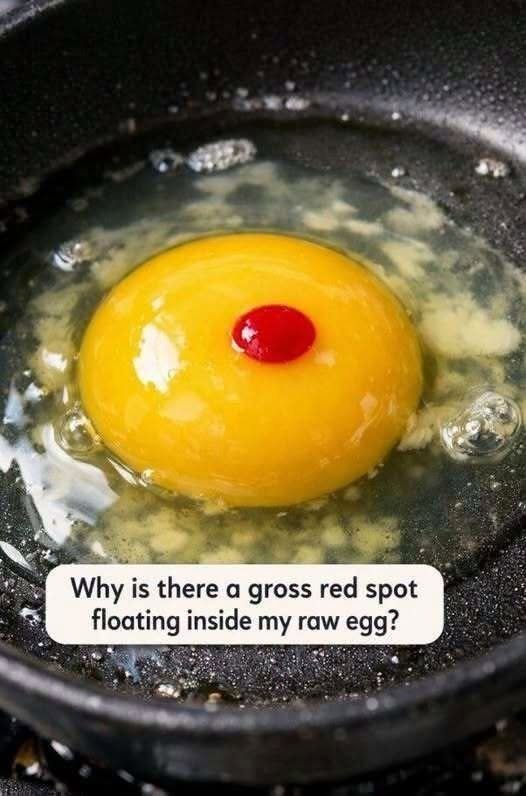
Cracking open a fresh egg only to find a striking red spot inside can be startling. Whether you were preparing breakfast, mixing ingredients for baking, or simply inspecting your groceries, that unexpected red mark can raise immediate questions about safety and quality. Eggs are a kitchen staple around the world, prized for their versatility, nutrition, and culinary importance. So when something looks unusual, it’s natural to wonder what it means and whether the egg is safe to eat.
Rather than indicating spoilage or contamination in most cases, a red spot inside a raw egg is typically a naturally occurring feature related to how the egg was formed inside the hen. Understanding why these spots occur, what they represent, and how to interpret them can help you make informed decisions in the kitchen. In this comprehensive article, we’ll explore the biological reasons behind red spots in eggs, how they form, what they mean for safety and quality, and what situations require caution.
What That Red Spot Actually Is
When you crack an egg and see a small red or reddish spot floating in the yolk or even in the egg white, you are most likely looking at what is commonly called a blood spot. These tiny specks of color can range from bright red to brownish, depending on the age and oxidation level of the blood. They are generally not harmful and do not indicate that the egg is fertilized, rotten, or unsafe to consume. Instead, they are remnants of a minor irregularity that occurred while the egg was forming within the hen.
The blood spot forms when a blood vessel in the hen’s reproductive tract — usually in the ovary or the oviduct — ruptures during the complex egg‑formation process. This rupture can release a small amount of blood that becomes incorporated into the yolk or albumen (egg white) before the shell fully forms around the contents. Occasional red spots are a natural variation in egg development and are seen in a small percentage of eggs produced each year.
How Blood Spots Form During Egg Development
To understand why blood spots appear, it helps to know a bit about the hen’s reproductive anatomy and how eggs develop. In a laying hen, the yolk begins developing within a follicle in the ovary, supported by a network of fine blood vessels. These vessels supply nutrients but are delicate, and occasionally one may burst as the egg matures and prepares for release.
When this happens, a small amount of blood can be incorporated into the forming egg. Once the yolk is released and moves down the reproductive tract — a passage called the oviduct — layers of albumen and membranes are added around it, ultimately enclosed by the shell. If a droplet of blood has entered the mix, it becomes visible as a red spot once the egg is cracked open.
A similar process can occur if a tiny fragment of tissue from the hen’s reproductive system slips into the egg as it passes through the oviduct. This can create what is known as a meat spot, which may appear as a brownish or grayish area inside the egg. Both types of spots are harmless and are simply natural variations rather than signs of contamination.
Does a Red Spot Mean the Egg Is Fertilized?
Many people mistakenly believe that a red spot means the egg has been fertilized and is beginning to develop into a chick. This is not the case. Fertilization and embryonic development involve entirely different structures within the egg, such as the blastodisc, which may appear as a small white dot on the yolk in fertilized eggs. A blood spot, by contrast, is unrelated to fertility or embryonic growth.
Even fertilized eggs laid for consumption rarely begin embryo development unless they are incubated under warm conditions. The presence of a red spot does not signal fertilization or embryo formation, and it does not change how the egg should be used in cooking or baking.
How Common Are Blood Spots in Eggs?
Eggs with red or brown spots are relatively uncommon, especially in commercially produced eggs. In industrial egg production, eggs typically go through an inspection process known as candling before packaging. In this process, a bright light is used to illuminate the interior of the egg so that imperfections, including larger blood spots, can be detected and removed before the eggs reach consumers.
Despite these quality control measures, small blood spots may still occasionally slip through, especially in darker‑shelled eggs where spotting is harder to detect through the shell. Eggs from local farms, backyard flocks, or producers that do not use industrial candling equipment tend to show these spots more frequently simply because they are not screened in the same way.
Blood Spots vs Meat Spots: What’s the Difference?
Though both terms describe visible imperfections in an egg, blood spots and meat spots are slightly different in origin and appearance:
see continuation on next page
For Complete Cooking STEPS Please Head On Over To Next Page Or Open button (>)